



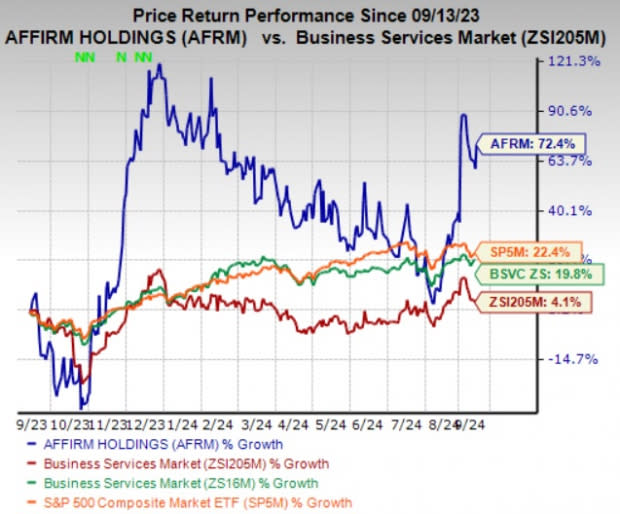

In the rapidly evolving world of financial technology, Affirm Holdings, Inc. (NASDAQ: AFRM) has carved out a unique position by offering “buy now, pay later” (BNPL) services that enable consumers to make purchases with flexible installment payments. As competition in the BNPL space intensifies, Affirm’s partnerships with major retailers and e-commerce platforms are emerging as key drivers of its growth and market presence. By collaborating with giants like Amazon, Walmart, and Shopify, Affirm is building a powerful network that could shape the future of both its business and the wider BNPL market.
Let’s dive into Affirm’s strategic partnerships and explore why these alliances may be a game changer for Affirm’s stock and its long-term growth potential.
1. Amazon Partnership: Expanding Reach to Millions of Consumers
One of Affirm’s most high-profile partnerships is with Amazon, the world’s largest online retailer. Announced in 2021, this collaboration allows Amazon shoppers to split purchases over $50 into installment payments through Affirm. The significance of this partnership cannot be overstated—by offering its BNPL solution on Amazon’s platform, Affirm gains access to an enormous customer base, with millions of monthly users.
The Amazon partnership has the potential to increase Affirm’s transaction volume significantly, as consumers have a trusted, interest-free alternative for financing larger purchases. For Affirm, which benefits from the transaction fees it earns with every purchase, this alliance could mean a substantial boost in revenue and user acquisition. With Amazon continuing to dominate the e-commerce market, Affirm is well-positioned to capture a steady flow of new customers, building brand recognition and expanding its user base.
2. Walmart Collaboration: Bringing BNPL to Brick-and-Mortar Retail
While many BNPL providers focus on e-commerce, Affirm has also moved into the brick-and-mortar space, partnering with Walmart, the largest retailer in the U.S. By offering its BNPL option in Walmart stores and online, Affirm has tapped into a large consumer demographic that may not traditionally use BNPL services. This partnership is especially important in introducing BNPL to mainstream retail and providing a flexible payment option to Walmart’s broad customer base, which includes a mix of middle- and lower-income shoppers.
Walmart’s reach provides Affirm with exposure to an enormous pool of consumers who make frequent, everyday purchases. The added convenience of Affirm’s installment plans in Walmart stores could encourage more repeat usage, increasing customer loyalty and transaction volume. By diversifying into physical retail, Affirm also mitigates some of its dependence on e-commerce, expanding its footprint in a way that competitors may not be able to replicate easily.
3. Shopify Alliance: Empowering Small Businesses with BNPL
Affirm’s partnership with Shopify is another major component of its growth strategy. Through this collaboration, Affirm’s BNPL solution is integrated into Shopify’s platform, making it accessible to thousands of small and medium-sized businesses (SMBs) that use Shopify to power their online stores. By enabling these smaller merchants to offer BNPL options, Affirm is helping to level the playing field, giving small businesses the ability to offer flexible payment options that attract more shoppers.
This partnership benefits Affirm in two key ways. First, by working with Shopify, Affirm gains access to a diverse range of retailers, allowing it to diversify its merchant base beyond major corporations. Second, this alliance aligns Affirm with a fast-growing segment of e-commerce. With Shopify’s popularity among entrepreneurs and SMBs, Affirm has positioned itself to grow alongside the expanding SMB market, gaining traction in niches it might otherwise not reach.
4. Peloton Partnership: Targeting High-End, Lifestyle Purchases
Affirm’s partnership with Peloton illustrates a different aspect of its strategy: focusing on lifestyle and big-ticket purchases. As a luxury fitness brand with high-priced products, Peloton aligns well with Affirm’s offering, as many consumers find installment payments attractive for more significant purchases. This partnership not only gives Affirm exposure to Peloton’s loyal, higher-income customer base but also positions it within the premium consumer goods market.
By working with brands like Peloton, Affirm can capture a share of the high-end market, expanding beyond mainstream retail. These high-ticket transactions provide a different revenue stream, as Affirm charges interest on certain financing options. This focus on high-value items could help Affirm drive higher transaction values and earn more in financing fees, enhancing its profitability.
5. Financial Impact and Revenue Growth
The financial impact of these partnerships on Affirm’s revenue and user growth is already becoming evident. By extending its reach across leading platforms, Affirm is driving transaction volumes, diversifying its revenue streams, and enhancing brand visibility. In its recent earnings reports, Affirm has highlighted how partnerships have fueled transaction volume growth and increased customer acquisition. By embedding itself into widely used platforms like Amazon and Shopify, Affirm is seeing increased merchant fees and transaction volume, which directly contribute to revenue.
Moreover, these partnerships support Affirm’s customer acquisition strategy by introducing BNPL to consumers who may not have otherwise considered it. Once these users become familiar with the benefits of BNPL through Affirm, they are more likely to continue using it for future purchases, supporting long-term growth and loyalty.
6. Competitive Advantage Through Brand Association
Affirm’s partnerships offer more than just access to customers; they strengthen its brand reputation through association with trusted, well-known companies. In a crowded BNPL market, standing out is a challenge, but Affirm’s affiliations with top-tier companies give it a competitive edge. Consumers may be more likely to trust Affirm’s services if they see it integrated with brands like Amazon, Walmart, and Shopify, which they already rely on and trust. This brand halo effect helps Affirm build credibility, distinguishing it from smaller BNPL providers that lack such high-profile associations.
As BNPL competitors grow and new entrants join the market, Affirm’s brand differentiation will be critical to maintaining market share. These partnerships also provide a form of defensive moat, as securing alliances with top retailers makes it more difficult for competitors to gain a foothold with these same merchants.
7. Challenges and Risks of Partnership Dependency
While Affirm’s partnerships are beneficial, they come with certain risks. Relying heavily on a few large partners could create dependency issues; for example, if Amazon or Walmart decided to end their collaboration with Affirm, it could significantly impact transaction volumes and revenue. In addition, these partnerships often require Affirm to pay fees or share revenue with merchants, which may compress margins.
Furthermore, as regulators scrutinize BNPL services more closely, Affirm’s high-profile partnerships could expose it to increased scrutiny. Any regulatory changes impacting BNPL, such as requiring more extensive credit checks or disclosure requirements, could affect Affirm’s profitability and make it less attractive to these partners.
Finally, Affirm’s heavy investment in partnerships also means it must continue delivering high transaction volumes and strong revenue growth to justify these alliances. If consumer interest in BNPL were to decline, or if economic conditions shifted drastically, Affirm’s partners might reconsider the value of offering BNPL, potentially jeopardizing these relationships.
What’s Next for Affirm and Its Partnerships?
Affirm’s strategic partnerships are proving to be a powerful tool for scaling its business, but sustaining these relationships and capitalizing on them effectively will be crucial. To maintain growth momentum, Affirm might consider expanding into other key verticals, such as healthcare or travel, where BNPL is starting to gain traction. Additionally, as BNPL faces increased regulatory oversight, Affirm could proactively work with partners to ensure compliance and position itself as a responsible BNPL provider.
Affirm might also explore expanding its partnerships internationally, tapping into growing markets where BNPL is still relatively new. By expanding internationally, Affirm could diversify its geographic revenue base, reducing dependence on U.S. markets and protecting itself against potential regulatory shifts in any single region.
Conclusion
Affirm’s strategic partnerships with major players like Amazon, Walmart, Shopify, and Peloton are transforming its growth trajectory, expanding its customer base, and bolstering its brand reputation. These alliances allow Affirm to reach millions of consumers and differentiate itself in a crowded BNPL market. If managed well, these partnerships could be game-changers, supporting Affirm’s revenue growth and brand loyalty while offering a solid foundation for future expansion.
However, with opportunities come risks. Affirm’s dependence on key partners, regulatory challenges, and the need to continually innovate will play a critical role in its success. For investors, Affirm’s partnerships offer both promise and risk, making the company a potentially rewarding yet speculative opportunity in the fintech space. As BNPL continues to grow, Affirm’s partnerships may indeed be the key to solidifying its place as a market leader, setting it up for long-term success in the evolving financial landscape.